
Hands-On Homeschool Math: Why We Stopped Using Textbook Problems (And What We Do Instead)
My kid is good at math when it’s connected to something real. Give them a textbook problem about a train leaving a station at 60 miles per hour and watch the motivation evaporate. Give them a problem about how many quarts of tomato sauce we need to put up this summer based on how much we used last year, and suddenly we’re having an actual math conversation.
This isn’t a learning disability. It’s just how a lot of kids work. Abstract problems require abstract motivation. Real problems come with built-in reasons to care.
The Homestead Is Full of Real Math Problems
It took me longer than it should have to realize that we already had a math curriculum running in our house every single day. We just weren’t calling it school.
Garden bed math: if a raised bed is 4 feet wide and 8 feet long, how much space is that? How many plants can we fit if they need 12 inches between them? How many beds do we need for the amount of tomatoes we want to can?
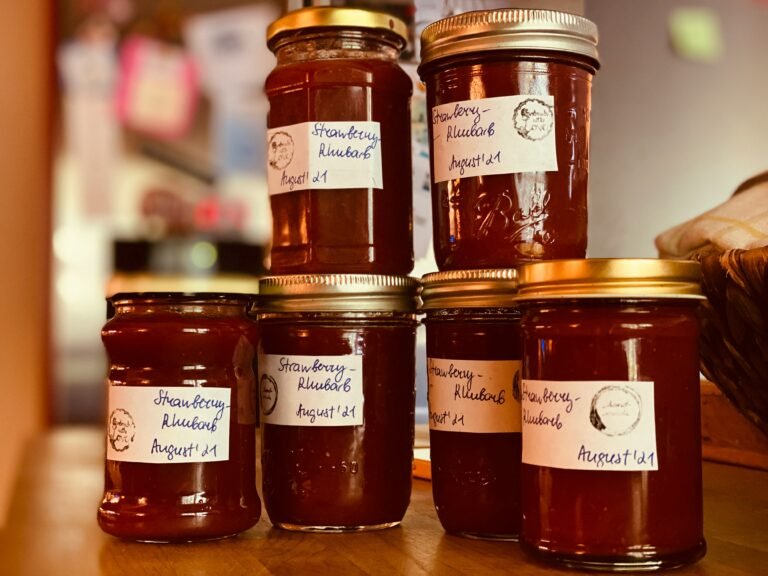
Recipe fractions: the jam recipe makes 6 half-pint jars. We want 9 jars. How do we scale it? What’s three-halves of three-quarters of a cup?
Kitchen conversions: the recipe calls for 2 quarts of tomatoes. We have them measured in cups. How many cups is that? How many pints?
Harvest math: we picked 23 pounds of green beans this week and 17 pounds last week. How much do we have? The pressure canner processes about 7 quarts per load. How many loads will this take?
None of these are fake. All of them have answers we actually need.
Animal Math Is Particularly Good for This Age
For kids in grades 3-6, animal care math works really well because the context is emotionally engaging. How many eggs did the flock lay this week? What’s the average per day? If feed costs $18 for a 50-pound bag and we go through about 3 pounds a day for our current flock size, how long does a bag last and what does that cost per month?
These problems involve multiplication, division, fractions, averaging, and some basic unit conversion — which is about where a grade 3-6 student should be. The difference is that they’re paying attention because they actually want to know the answer.
Market Math Introduces Economic Thinking Early
Simple pricing math — what did the ingredients cost, what are we charging, what’s left over — introduces economic concepts at an age when they’re concrete and accessible. A 9-year-old can understand that if a jar of jam cost $1.50 to make and we’re selling it for $4, we made $2.50. Whether that’s worth it depends on how long it took and how many jars we sold. That’s basic business math and it makes sense in a kitchen context in a way that abstract profit/loss problems don’t.
The workbook introduces a simple break-even analysis in the later grades (4-6 range) — how many jars do you have to sell before the batch pays for itself? It’s a concept that sticks because the scenario is real.
No Homestead Required
I want to be clear that you don’t need chickens or a big garden to use this kind of math. All the scenarios are self-explanatory enough that any kid can engage with them, even if they’ve never seen a garden bed. The math is what matters, and the context just makes it more interesting than it would be otherwise.
A Workbook That’s Already Built Around This
My Grades 3-6 Homestead Math Workbook has 24 printable pages organized into 8 sections — garden bed math, recipe fractions, kitchen conversions, harvest word problems, animal care math, a running pantry inventory project, market math, and an introduction to break-even thinking. Complete answer key included.
Get the Homestead Math Workbook →
This workbook pairs with the K-5 Backyard Nature & Garden Journal for a connected science and math sequence that uses the same outdoor and kitchen context.