Can You Reuse Canning Jars, Lids, and Rings? Here’s the Actual Answer
This question comes up every single canning season, usually from people looking at a stack of used lids after a big batch and wondering if they have to buy more. The answer is different for each part of the two-piece lid system, so let me break it down clearly.
Jars: Yes, Reuse Them
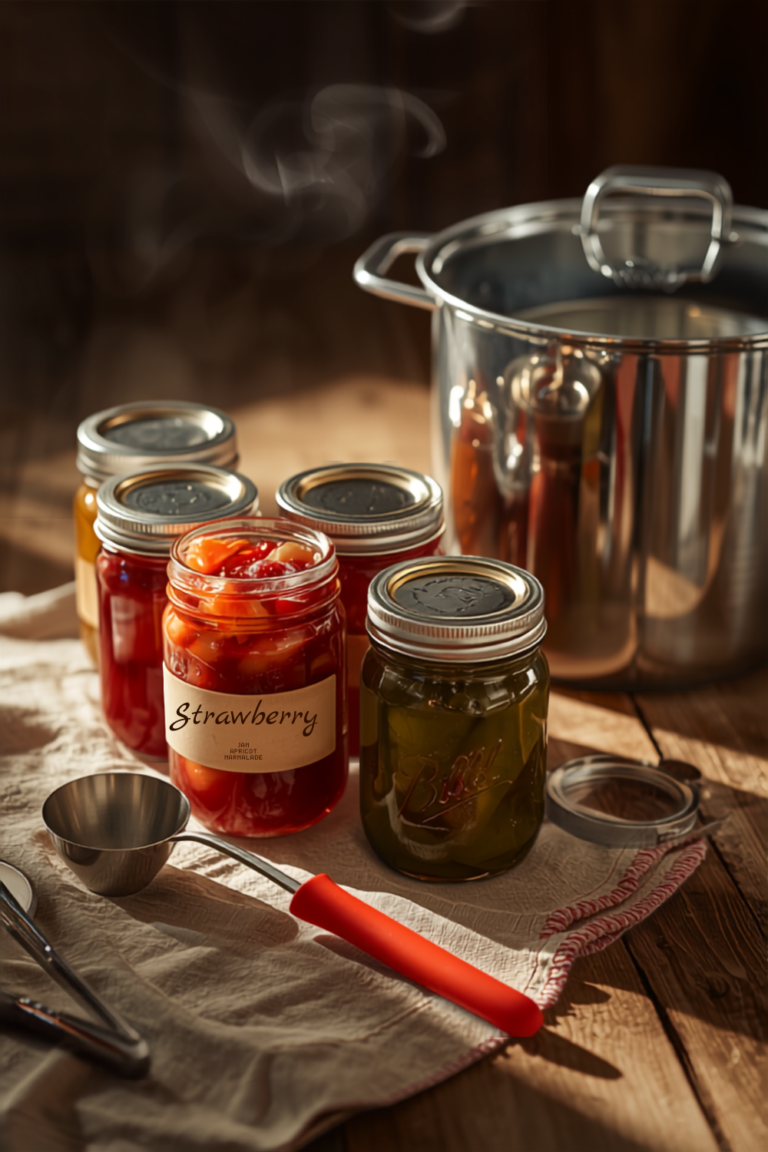
Glass Mason jars can be reused season after season as long as they’re in good condition. Before every batch, run your finger around the rim of each jar and look for chips, cracks, or rough spots. Even a tiny chip on the rim is enough reason to retire a jar from canning — that chip is exactly where a seal failure starts. Jars with damaged rims are still perfectly useful for dry storage, just not for canning.
Don’t reuse commercial food jars — pasta sauce jars, pickle jars from the grocery store, mayonnaise jars. These are made to different specifications than Mason-style canning jars and aren’t designed to handle the temperature swings and pressure of home canning. They can crack unexpectedly in the canner or fail to seal reliably. The small savings aren’t worth the risk.
Flat Lids: No, Don’t Reuse Them
Standard metal flat lids — the kind with the sealing compound (the rubbery gasket on the underside) — are designed for single use. During processing, the sealing compound gets compressed against the jar rim as the vacuum forms. Once it’s been compressed by that first use, it won’t form a reliable seal a second time. The indentation is there even if you can’t see it clearly.
The USDA and National Center for Home Food Preservation state that “lids should not be used a second time since the sealing compound becomes indented by the first use, preventing another airtight seal.”
A failed seal on a jar of high-acid jam is annoying. A failed seal on a jar of low-acid vegetables or meat is a genuine safety risk. New lids cost about $3-4 for a dozen — this is not the place to cut costs.
One note on reusable lid systems: Tattler and similar brands make plastic lids with separate rubber gaskets that are designed for multiple uses. These are a real option if you want to reduce waste, but they work differently from standard two-piece lids and require slightly different technique. These reusable lid systems have not yet been formally approved by the USDA, though many canners use them successfully. If you go this route, follow the manufacturer’s instructions exactly, since the tightening method differs from standard lids.
Screw Bands / Rings: Yes, Reuse Them (With Conditions)
The metal screw band that holds the lid in place during processing can absolutely be reused — as long as it’s in good condition. Before reusing, check each band for:
- Rust (any rust means retire it)
- Dents or bends in the threads (these prevent proper lid seating)
- Rough spots on the inside edge (can scratch jar rims and interfere with lid placement)
If a band passes that check, wash it, dry it thoroughly, and save it for next batch.
One thing many people don’t know: you should remove the screw bands from sealed jars before storing them. The band’s job is done once the jar seals — leaving it on during storage can trap moisture underneath, leading to rust or even mold. It can also mask a lost seal if the vacuum fails during storage, since the band might hold the lid in place even without a real seal beneath it. Removing the bands lets you see clearly that the lid is truly concave and sealed tight.
The Quick Reference
| Part | Reusable? | Conditions |
|---|---|---|
| Glass jar | Yes | No chips or cracks on rim |
| Flat metal lid | No | Single use only |
| Screw band / ring | Yes | No rust, dents, or bent threads |
Stock Up Before Canning Season
Lids go out of stock during peak canning season (July-September) in a lot of areas. If you’re planning a big canning season, buy your lids before the rush rather than trying to find them mid-August when stores are picked clean.
Track Your Batches
My Canning Journal & Batch Tracking Workbook helps you log each batch including any seal notes — useful for catching patterns if you’re having recurring seal problems with a specific lid brand or jar.
Get the Canning Journal & Batch Tracking Workbook →
Having seal failures? Read Why Your Canning Lid Didn’t Seal for the 10 most common causes.