How to Plan a Kitchen Garden That Actually Feeds Your Family
Most garden plans fail for the same reason: they’re built around what looks good on paper, not around what a family actually eats. You end up with six zucchini plants nobody wanted and not nearly enough of the tomatoes you needed for a year of sauce.
A kitchen garden that actually feeds you starts with a different question than “what should I grow?” It starts with “what do we eat, and how much of it?”
Here’s how to plan one that earns its space.
Start With Your Plate, Not the Seed Catalog
Before you pick a single variety, make a short list of what your household actually cooks with regularly — the staples that show up in meals week after week. For most home-preservation households, that list includes tomatoes, peppers, onions, garlic, and beans, since these form the backbone of sauces, salsas, and canned goods that carry you through winter.
Rank that list by priority. The crops you depend on most for cooking and preserving get first claim on your best growing space — the spot with the most sun, the richest soil, easiest water access. Everything else fills in around them.
This single step prevents the most common beginner mistake: a garden full of variety and low on volume. A few well-chosen crops grown in real quantity will feed you more reliably than twenty different vegetables grown three plants at a time.
Measure Before You Plant
Walk your space and sketch it — a simple hand-drawn grid on paper is enough, no software required. Note where the sun actually falls throughout the day, since most fruiting vegetables need at least six hours of direct sun to produce well.
A few practical things to account for as you sketch:
Mature size, not seedling size. A tomato transplant looks harmless in a 4-inch pot. Three months later it’s a sprawling, caged plant taking up two square feet. Plan spacing for the full-grown plant, not the one you’re holding when you put it in the ground.
Pathways. Leave walkways at least 18–24 inches wide between beds or rows. You’ll need that space for a wheelbarrow, a harvest basket, and your own movement without trampling what you just grew.
Sun shadows as plants grow. Tall crops like pole beans or trellised cucumbers cast shade as the season progresses. Place them on the north side of shorter, sun-loving crops so they don’t block light later in the season.
Build in Succession From the Start
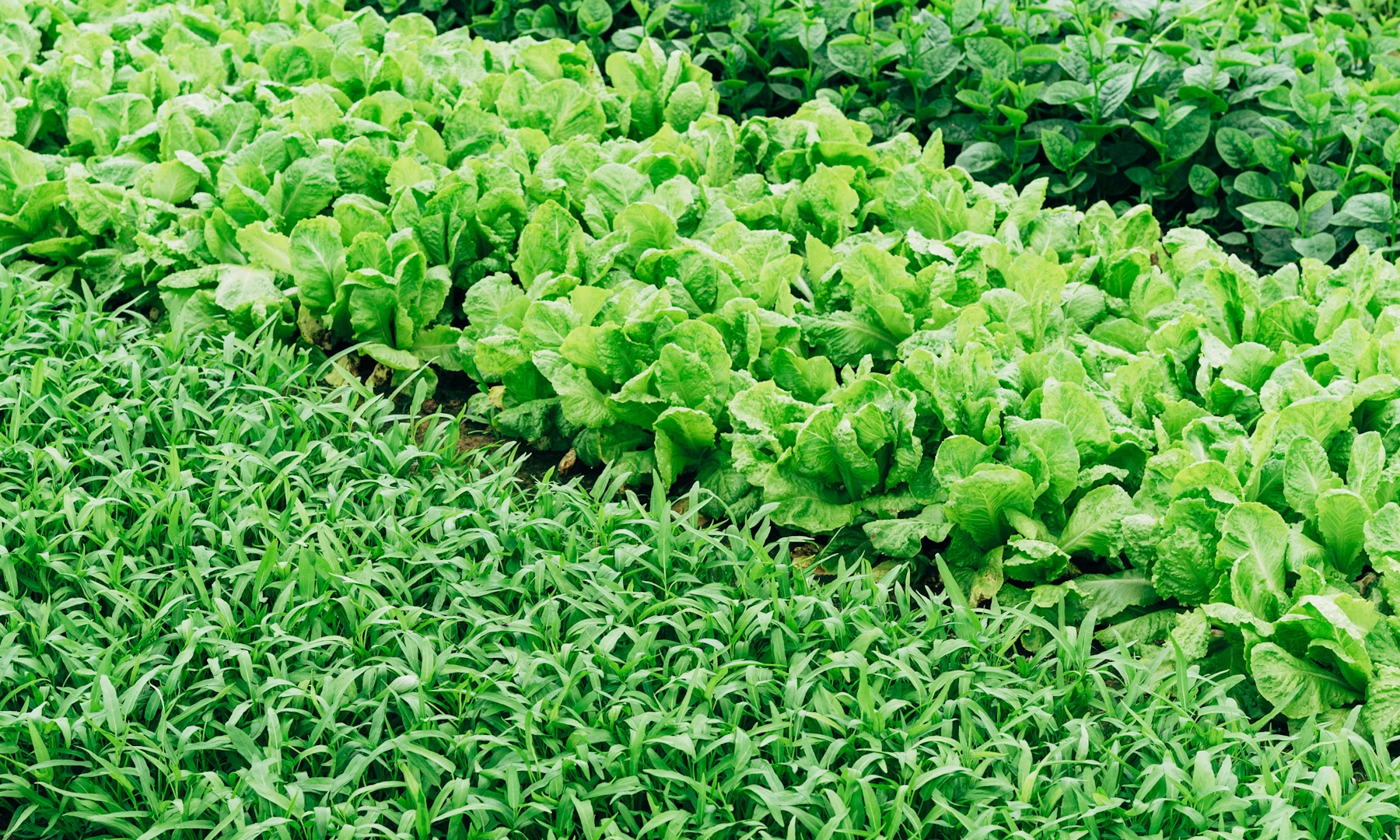
Succession planting — staggering when you sow instead of planting everything on one day — is the difference between a single overwhelming harvest and a steady supply all season. Fast-maturing crops like radishes, lettuce, and arugula are the easiest entry point: sow a new section every two to three weeks, and you’ll have something ready to pick continuously instead of twenty heads of lettuce ready on the same day.
A simple way to start: divide your lettuce or greens space into thirds. Plant one third now, the next third in two to three weeks, and the final third two to three weeks after that. By the time the first third is finished, the second is ready, and so on.
This approach works for radishes (about 25 days to maturity), arugula (around 30 days), lettuce (45 days), bush beans (55 days), and cilantro (21 days) — all fast enough to cycle two or three times in a single season.
Group Plants by What They Need, Not Just What Looks Nice Together
Pair plants based on shared water and sun needs first, then consider companion planting benefits. Mixing crops rather than planting large single-crop blocks also helps naturally — a wide swath of the same plant tends to attract more pests than a more varied bed.
A practical, tested layout for a single 4×8 raised bed looks something like this:
Back row (trellis line): Pole beans, evenly spaced Middle row: Two determinate tomato plants, caged Front row: Basil, lettuce, and other quick greens, resown every few weeks
This kind of layout maximizes a small footprint by using vertical space (the trellis) while keeping fast-cycling crops in the most accessible front row, where you’ll be checking and harvesting most often.
Plan for What You’ll Actually Preserve
If part of your reason for gardening is filling a pantry, work backward from your preservation goals. A family that cans 20 quarts of tomato sauce a year needs significantly more tomato plants than one growing tomatoes just for fresh summer eating — often 10–15 plants versus 3–4.
This is where your garden plan and your preservation plan should talk to each other. Decide roughly how many jars of each preserved item you want heading into next winter, then size your plantings to match — not the other way around.
Keep a Garden Journal
Write down what you planted, where, what spacing you used, and what worked or didn’t. This single habit does more for next year’s garden than almost anything else, because it turns each season into information instead of guesswork. You don’t need anything elaborate — even a simple page per bed with a few notes at season’s end is enough to make next year’s plan faster and smarter.
Your Garden Plan, On Paper
Trying to hold an entire season’s planting schedule in your head is how successions get missed and beds sit empty. A printed layout you can write on, pin up, and actually follow makes the difference between a plan and a guess.
My Vegetable Garden Planner gives you a structure to map your beds, track spacing, and plan succession sowings all in one place — built from the same approach laid out in this post, made for printing and using right in the garden.
Get the Vegetable Garden Planner→
Curious how your garden plan should connect to your canning plan? Read Water Bath vs. Pressure Canning: Which One Do You Actually Need? to start mapping out what you’ll do with this season’s harvest.