Homeschool Middle School Science: Teaching Fermentation and Food Preservation (With Something They Can Actually Eat)
My kid has zero interest in reading about science. Doing science is a different story entirely. And fermentation turns out to be one of the best hands-on science units we’ve ever done, because the experiment is something you can eat at the end — which raises the stakes considerably from the average baking soda volcano.
Here’s why fermentation and food preservation make genuinely excellent middle school science content, and what we cover when we teach it.
The Science Is Real, Not Watered Down
Most middle school science curriculum covers cells and biology at a pretty surface level. Fermentation gives you a chance to go deeper in a way that’s concrete rather than abstract.
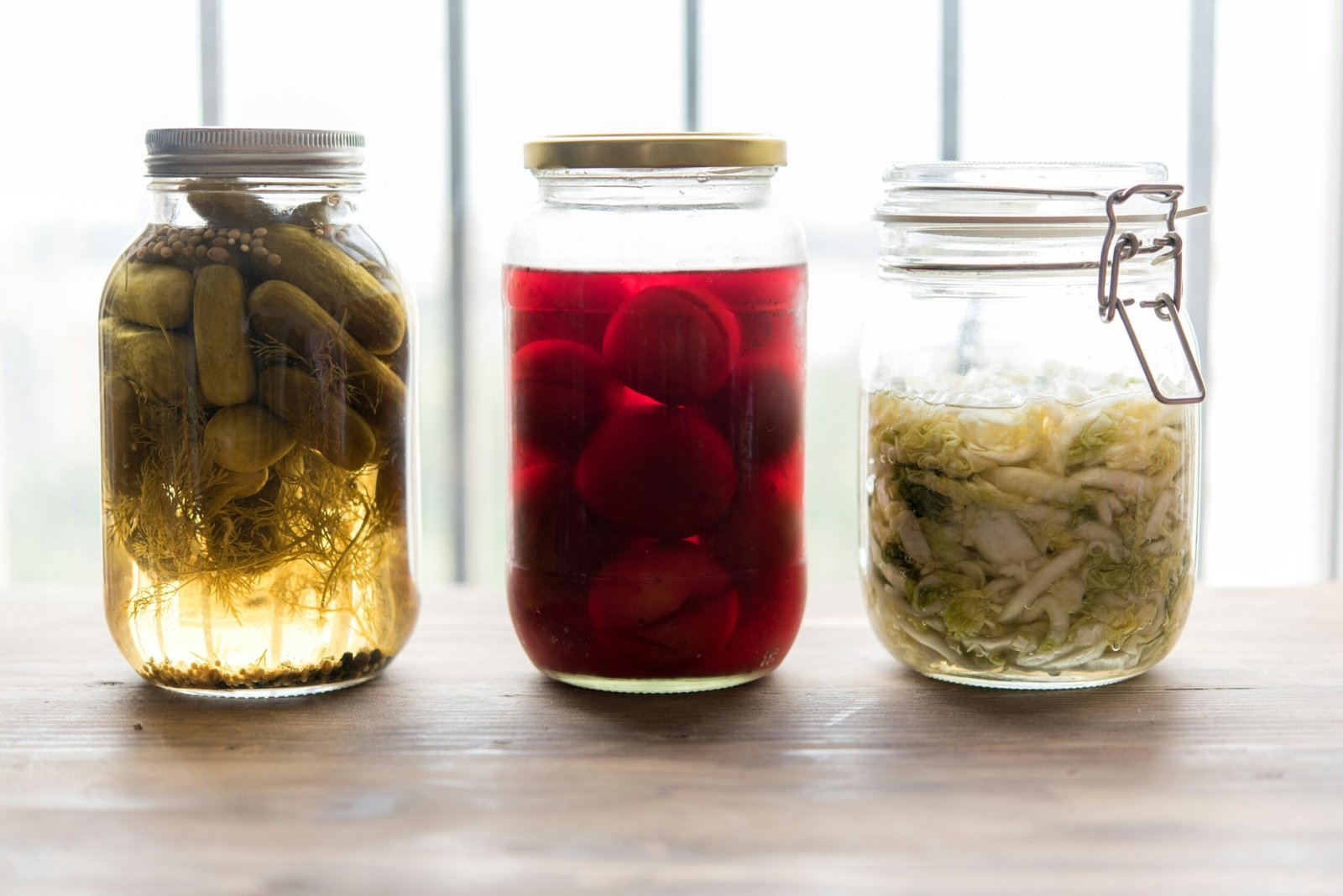
When you make sauerkraut, you’re watching a specific bacterial succession happen in real time. The bacteria that start the fermentation (Leuconostoc mesenteroides) create conditions that eventually kill themselves off and hand the process over to Lactobacillus plantarum, which finishes the job. That’s not just “bacteria make the cabbage sour” — that’s a real biological process with identifiable stages that a student can observe by tracking the smell, taste, and pH over several days.
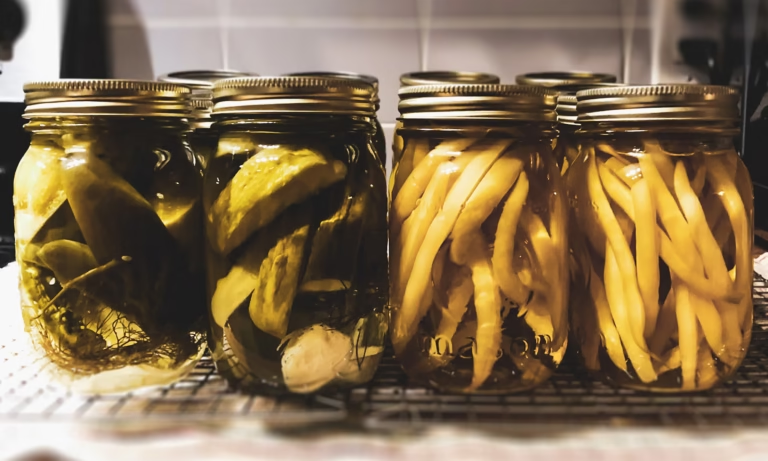
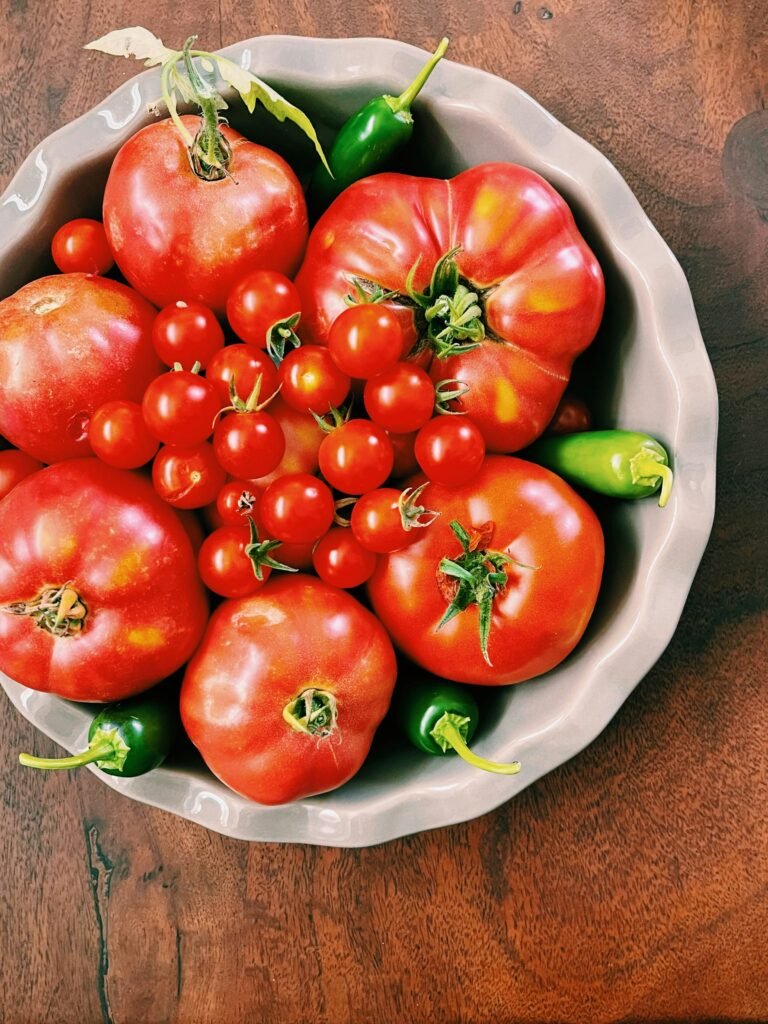
Canning gets into similar territory. Why does botulism only grow in low-acid, low-oxygen environments? Why can you water bath tomatoes but not green beans? The answer involves C. botulinum biology, pH chemistry, and the difference between killing active bacteria and destroying heat-resistant spores. That’s actual microbiology, and it makes sense in the context of a real thing you’re doing in your kitchen.
A Lab Journal Makes It Real Science
The difference between a science activity and a science lab is documentation. When a student records daily observations — what the ferment smells like, whether it’s bubbling, what the pH reads, what changed since yesterday — they’re doing real scientific observation. They’re building data. They’re watching a hypothesis play out.
This is also where the learning sticks in a way it doesn’t from a textbook. Weeks after finishing, a student who made sauerkraut and tracked it through a lab journal will still be able to explain why salt concentration matters and what the bubbles mean. A student who read about fermentation will have forgotten most of it.
Sourdough Gets the Same Treatment
Sourdough fermentation involves a different cast of characters — wild yeast and lactic acid bacteria working together in a symbiotic relationship — but the underlying science overlaps with vegetable fermentation in useful ways. Starting a sourdough starter and keeping an observation log gives students a second data set to compare, and the daily feeding routine makes the biological cycles more visible.
It also makes a good comparison point: why do some ferments get more sour over time while sourdough stabilizes? What’s the LAB doing in each case?
This Counts as Real Science Credit
For homeschool families keeping transcripts, a unit like this covers: microbiology, chemistry (pH, acids, osmosis), scientific method (hypothesis, observation, data recording), and food safety science. Depending on how deeply you go, it can count toward life science or chemistry hours, and the lab journal pages provide documentation.
A Unit Study That Has It All Laid Out
If you want the full curriculum with verified science content, lab journal pages, vocabulary, review questions, and an answer key, my Grades 6-8 Fermentation & Food Preservation Unit Study has all of it in 16 printable pages. The food safety science is verified against USDA and standard microbiology sources.
Get the Fermentation & Food Preservation Unit Study →
Already doing fermentation at home? Read Why I Stopped Canning My Salsa and Started Fermenting It Instead — it’s the same science, from a slightly different angle.