Raw Pack vs. Hot Pack for Canning Meat: Which One Should You Use?
If you’ve read anything about canning meat, you’ve run into the terms raw pack and hot pack. Most guides mention both and then move on without really explaining when to use which one, or why the choice actually matters. Here’s the actual difference and how to decide.
What the Terms Mean
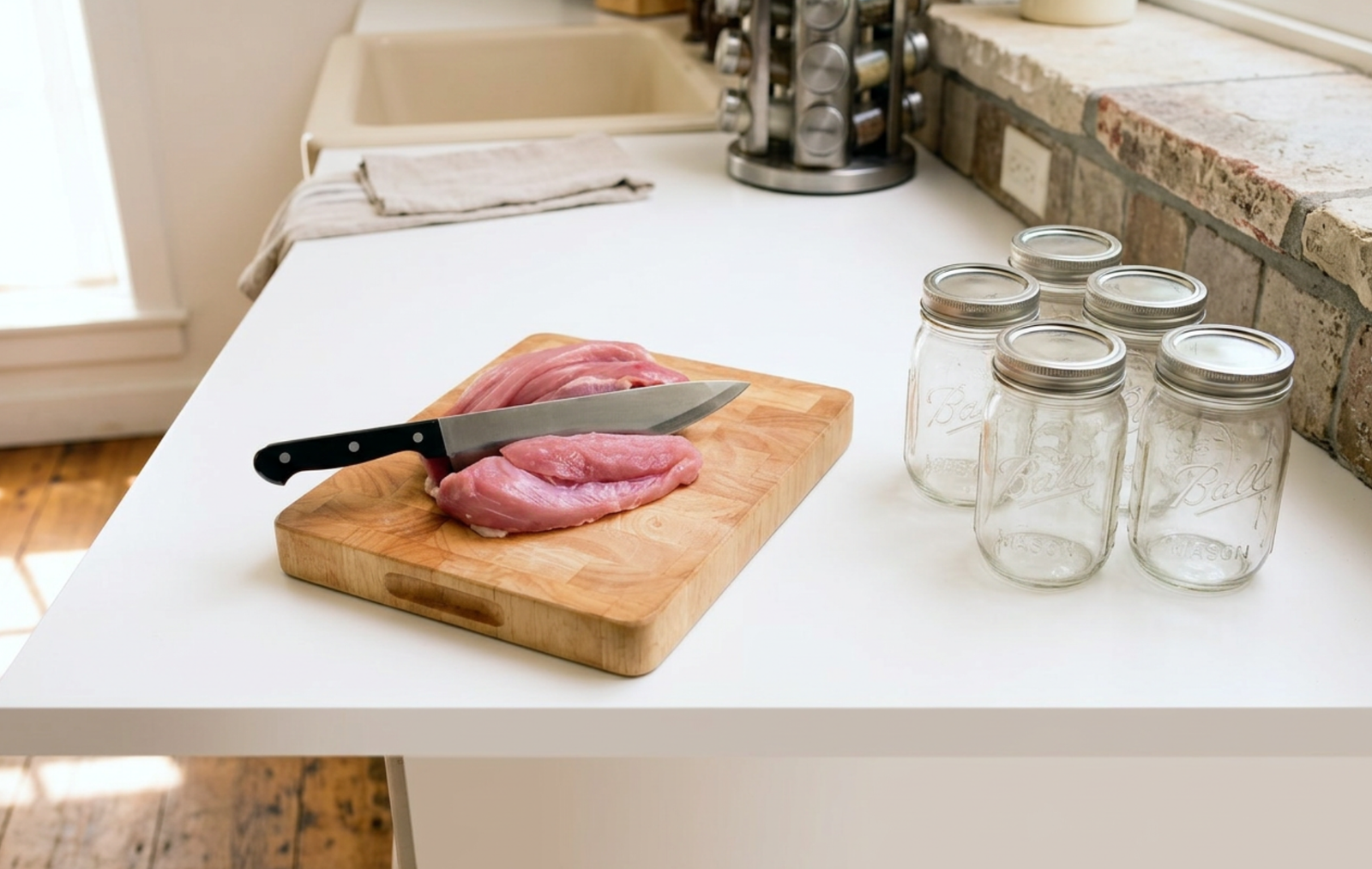
Raw pack means you fill your jars with raw, uncooked meat and go straight to processing. No precooking, no added liquid in most cases — just trimmed, fresh meat packed loosely into the jar, then into the canner.
Hot pack means you partially precook the meat first — by roasting, browning, boiling, or steaming until about two-thirds done — and then pack it hot into jars with boiling liquid before processing.
Both methods are USDA-tested and safe when processed correctly. The difference is in the process and the result, not in the safety.
What Happens Differently in the Jar
This is the part most explanations skip.
Raw meat shrinks significantly during the pressure canning process as heat drives moisture and air out of the tissue. A jar that looks well-packed going in will have noticeably less meat and more liquid after processing. This is completely normal — it doesn’t mean anything went wrong. But it does mean your raw-packed jars may look less full than you expected when you pull them out.
Hot-packed meat has already shrunk during precooking, so what you see going into the jar is closer to what you’ll see coming out. Less shrinkage, less air space, and the jar fills more consistently.
Raw Pack: When It Makes Sense
Raw pack is genuinely simpler. You skip the precooking step, which saves time and means fewer dishes. For someone processing a large quantity of meat — which is most people who are canning meat at all — skipping that step matters.
Raw pack works best for:
-
Boneless chicken pieces
-
Beef and pork chunks
-
Any cut where texture after processing isn’t critical (since both methods produce tender, almost braised-texture meat anyway)
One thing to know about raw-packed jars: do not add liquid to raw-packed meat jars — the meat releases enough liquid during processing on its own. Adding liquid would overfill the jar once the meat releases its juices, creating a mess and potentially affecting the seal.
Hot Pack: When It Makes Sense
Hot pack produces a slightly more consistent finished product and is better when you want to add liquid — broth, meat drippings, or water — to the jar. Since the meat has already released most of its moisture during precooking, adding boiling liquid gives you a jar that stays fuller and has a better broth-to-meat ratio in the finished product.
Hot pack works particularly well for:
-
Poultry (especially chicken with bones)
-
Meat you’re planning to use in soups or stews directly from the jar
-
Situations where you want a good amount of flavorful broth in the jar alongside the meat.
For hot pack, boil, steam, or bake meat until about two-thirds done, fill jars with pieces and boiling broth, leaving 1¼ inch of headspace.
The One Thing That Doesn’t Change Between Methods
Processing time and pressure are the same regardless of whether you raw pack or hot pack. The USDA processing times for pressure canning meat are based on the type and size of meat and the jar size — not on whether the meat went in raw or precooked. Don’t adjust processing time based on which method you’re using.
Fat: Trim It Before You Pack, Either Way
Trim off all gristle, bruised spots, and excess fat before canning. This applies to both raw pack and hot pack. Fat left on meat can work its way up to the jar rim during processing and interfere with the seal. It can also affect flavor over storage time in ways that aren’t pleasant. A little natural fat in the meat is fine — visible chunks of fat or thick fat caps should come off before the jar.
My Honest Take
I use raw pack most of the time because it’s faster and the end result is essentially the same. The meat comes out tender either way — pressure canning produces that slow-cooked, fall-apart texture regardless of how you packed it going in. For chicken specifically, I’ll sometimes hot pack when I want a good amount of broth in the jar, but for beef and pork chunks I almost always go raw pack and skip the extra step.
The Full Reference
If you’re regularly canning meat and want processing times, headspace requirements, and pack method guidance all in one place, my Advanced Home Canning Guide covers meats, soups, and complete meals in a jar with the detail you actually need.
Get the Advanced Home Canning Guide →
New to pressure canning? Read The Beginner’s Guide to Canning Meat at Home first.