How Long Does Home Canned Food Actually Last?
The official answer you’ll find everywhere is one year. Use your home canned food within one year of canning it. That’s what the USDA recommends, that’s what Ball says, and that’s what most extension offices will tell you.
Here’s what that actually means — and what it doesn’t.
What “One Year” Actually Means
The one-year guideline is a quality recommendation, not a safety cutoff. The USDA is clear on this: properly canned food that’s been stored correctly doesn’t become unsafe after twelve months. What changes is quality — color, texture, and flavor start to deteriorate over time, even in a perfectly sealed jar.
So a jar of green beans you canned fourteen months ago isn’t dangerous to eat. It might be a little softer and duller in color than it was at month six. It’s still safe if it was processed correctly and the seal is intact.
The one-year guideline exists because the quality difference between a six-month-old jar and an eighteen-month-old jar can be noticeable. After two years, it’s usually more noticeable. After three or four years, you’re eating food that’s still technically safe but may not taste like much.
High-Acid vs. Low-Acid Foods Age Differently
Not all home canned food ages the same way.
High-acid foods — tomatoes, fruit, jam, jelly, pickles — have a shorter quality window because the acid itself continues to affect color and texture over time. Tomatoes especially tend to darken and soften noticeably after twelve to eighteen months. They’re still safe, just less appealing.
Low-acid foods — green beans, corn, meat, broth, dried beans — actually hold quality longer in the jar. A quart of pressure canned chicken broth at eighteen months is going to taste very close to what it tasted like at six months. Low-acid foods can maintain good quality for two to five years under proper storage conditions.
This is the opposite of what most people assume. People tend to think of meat as more perishable and fruit as more stable, but in the context of sealed, properly processed jars, low-acid pressure canned foods actually hold up longer.
Storage Conditions Matter More Than People Realize
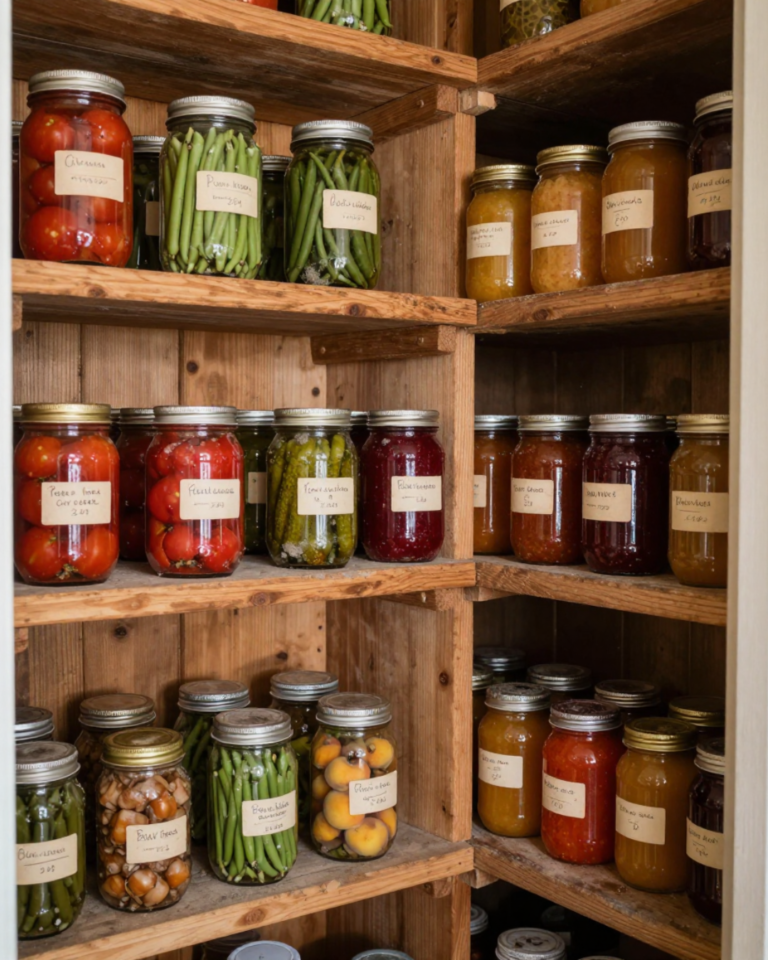
The one-year quality guideline assumes reasonable storage: cool, dry, dark, and stable temperature. How you store your jars affects the quality timeline significantly.
Temperature is the biggest factor. Canned foods maintain mineral content for their entire shelf life, but heat accelerates the breakdown of color, texture, and flavor. A jar stored at 50°F will still taste good well past a year. A jar stored in a warm garage that hits 80-90°F in summer is going to degrade noticeably faster — potentially in half the time.
Avoid temperature fluctuations. It’s not just the average temperature but the swings — going from cold to warm and back repeatedly stresses the seal and accelerates quality loss. A consistently cool basement is better than a space that heats up and cools down seasonally.
Keep them out of light. Light degrades color in canned foods over time, especially in clear glass jars. A dark pantry or cabinet is significantly better than open shelving in a bright room.
Store off the floor, especially concrete. Moisture can wick up through concrete and accelerate rust on metal components, which can eventually compromise the seal.
How to Tell If a Jar Is Still Good
Before using any home canned jar, check a few things:
The seal is still intact. Press the center of the lid — it should be concave (curved down) and firm. If it flexes or pops up and down, the seal has failed and the jar should be discarded.
The lid looks normal. No bulging, no rust around the edges, no obvious damage.
When you open it, it looks and smells right. Normal food smell, no off odors, no spurting liquid when the seal breaks. Home canned meat and vegetables should be boiled for 10 minutes before eating regardless of how they look or smell.
If anything seems off, discard it. Don’t taste-test to check. The specific danger with improperly processed food is that botulism toxin is odorless and colorless — you can’t smell or taste it. If the seal failed at some point, or the food was improperly processed, the jar goes in the trash.
The Practical Answer for Your Pantry
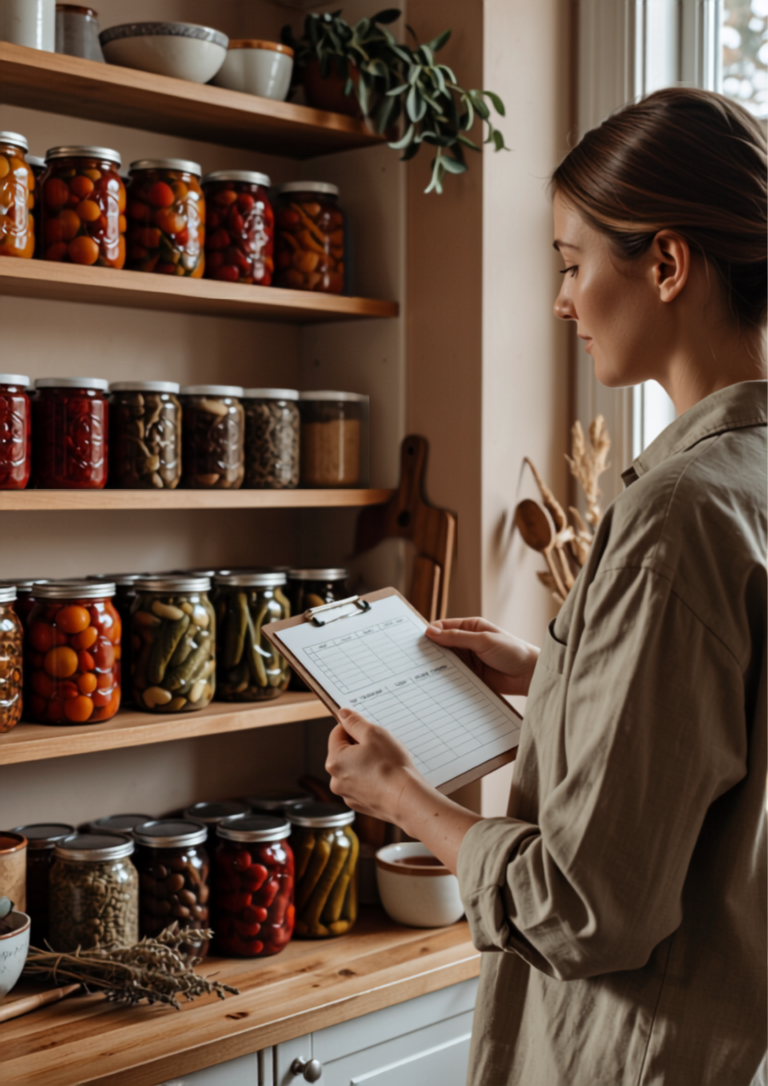
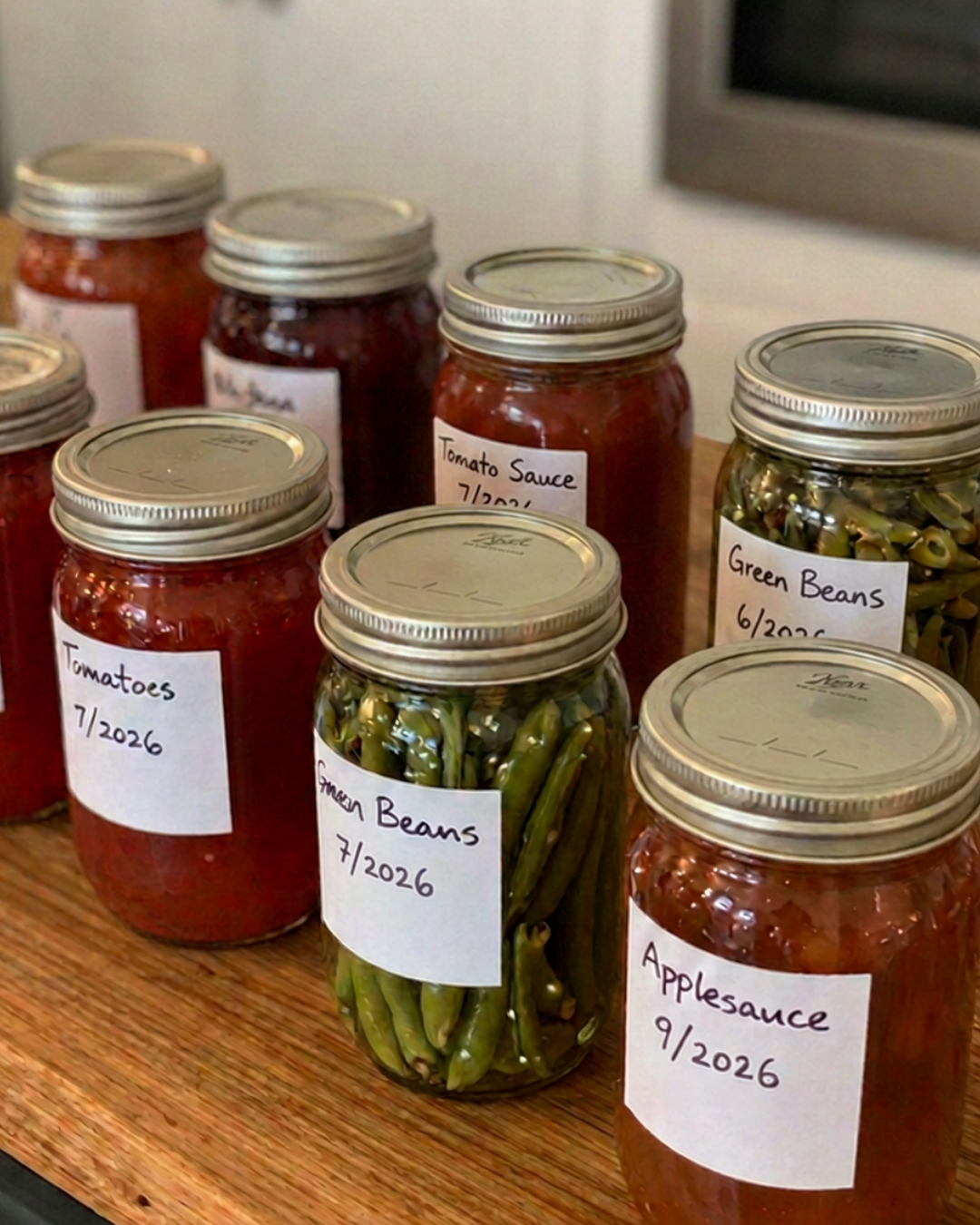
Use a first-in, first-out system — oldest jars in front, newest in back — and try to rotate through your stock within a year or two. Don’t panic if you find a jar from two seasons ago that’s been properly stored and sealed; it’s most likely fine. Do prioritize high-acid foods (tomatoes, jam, pickles) since those genuinely do decline in quality faster.
I put up somewhere between 1,500 and 2,000 jars a year. If I canned everything that came out of my garden and then never went back to it for two years, the quality loss would be real. The rotation system matters — not because old jars are dangerous, but because the point of canning is to have food that’s worth eating.
Track What You Have
The easiest way to actually rotate your stock is knowing what you have. My Canning Journal & Batch Tracking Workbook helps you log what you put up, when, and how much — so you know what to use first and what you can afford to let sit.
Get the Canning Journal & Batch Tracking Workbook →
Want to make sure your storage setup is actually working? Read How I Organize My Homestead Pantry for a real-world look at how to store and rotate home canned goods.