How to Can Tomatoes at Home (And the One Safety Step You Can’t Skip)
Tomatoes are probably the most commonly canned food in home kitchens, and for good reason — a bushel of paste tomatoes from your garden or a local farm can fill your pantry with crushed tomatoes, whole tomatoes, and sauce that tastes completely different from anything in a commercial can. But there’s one step specific to tomatoes that confuses a lot of people, and skipping it is a real safety issue.
Here’s what you need to know.
The Acid Problem With Tomatoes
Tomatoes used to be reliably high-acid — acidic enough that water bath canning them was straightforward. Modern tomato varieties, especially beefsteak and other low-acid breeds, are less acidic than older varieties. Some are actually borderline enough that water bath canning them without added acid puts you in unsafe territory, since the water bath process only works safely for foods at pH 4.6 or below.
The USDA’s solution — and the one that’s been in their guidelines for decades now — is simple: add acid to every jar of tomatoes before processing, regardless of variety. This isn’t optional, and it applies whether you’re water bathing or pressure canning.
The amounts, confirmed across USDA and extension sources:
-
Quarts: 2 tablespoons bottled lemon juice or ½ teaspoon citric acid
-
Pints: 1 tablespoon bottled lemon juice or ¼ teaspoon citric acid
Add this directly to each jar before filling. If the slightly tart flavor bothers you, a small amount of sugar in the jar offsets it without affecting safety.
Use bottled lemon juice, not fresh. Fresh lemon juice has variable acidity depending on the lemon — bottled has been standardized and tested at a consistent level. This is one of those cases where the specific product form matters for safety, not just convenience.
Vinegar (4 tablespoons per quart of 5% acidity vinegar) works as an alternative but tends to cause noticeable flavor changes in plain canned tomatoes. Your call.
Water Bath or Pressure Canning for Tomatoes?
Either method is safe for tomatoes as long as you’ve added the required acid. The USDA provides tested recipes for both.
Water bath is more common for plain tomatoes, juice, and sauce because it’s simpler — no pressure to manage, no waiting for the canner to depressurize. Processing times are longer than pressure canning but the process is more straightforward.
Pressure canning gives slightly better quality results for some products (better color and texture retention) and shorter processing times, but you still have to add the acid even when pressure canning tomatoes. Some people assume pressure canning makes the acid step unnecessary — it doesn’t.
What You Can Actually Do With Canned Tomatoes
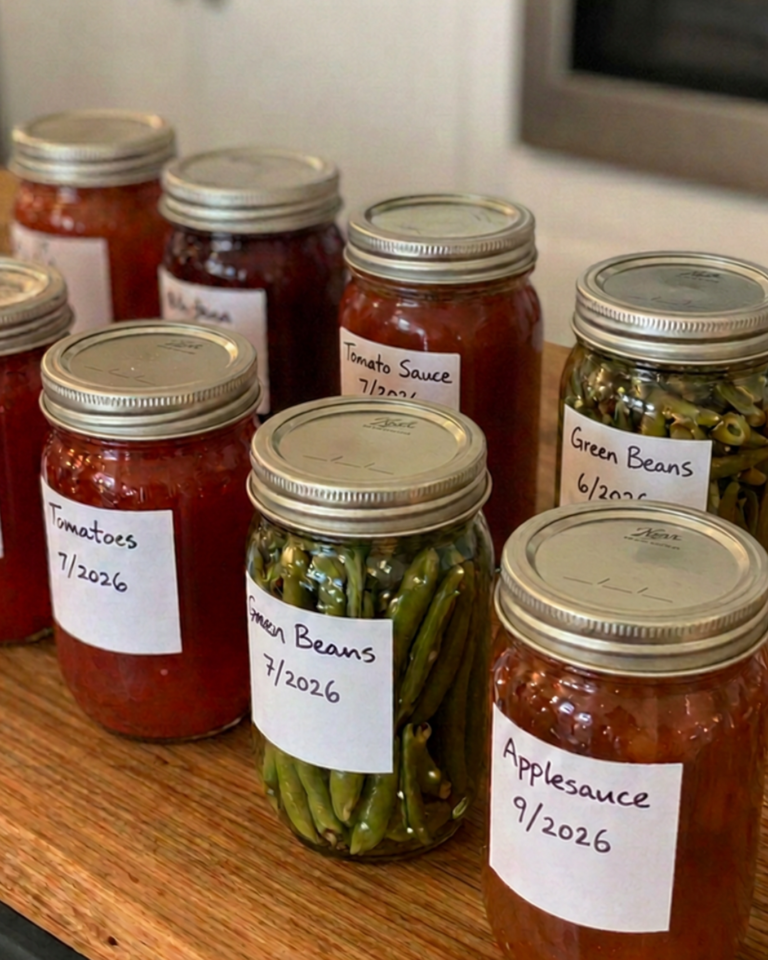
Whole or halved tomatoes — the most versatile form. You can do everything with a jar of canned whole tomatoes: crush them for sauce, chop them for soups and stews, use them as-is.
Crushed tomatoes — a bit more processed going in, saves time when you’re using them later. Good for sauce and soup bases.
Tomato juice — runs straight from cooked tomatoes, processed separately. Good for drinking, soups, and cooking.
Tomato sauce — plain, no meat, no thickeners. The USDA has a tested recipe for this. Seasoned sauce with garlic, onion, and peppers requires a different tested recipe and must be pressure canned. Plain sauce can be water bathed with added acid.
What I don’t recommend for beginners: heavily customized sauce with lots of added vegetables right out of the gate. Get the plain version down first, then explore the tested combination recipes.
A Few Practical Notes From Doing This Every Year
Don’t can tomatoes from frost-killed or dead vines. Tomatoes from vines that have been hit by frost or have died are less acidic than healthy vine-ripened fruit. The USDA specifically flags this. Don’t risk it — if the vine died before harvest, freeze those tomatoes instead of canning them.
Paste tomatoes give you the best yield and texture. Roma and other paste types have less water and more flesh, which means more tomato in the jar and less liquid, and they hold together better after processing. You can can other varieties — I do when I have a mixed harvest — but expect softer texture and more liquid in the jar.
The tomatoes will float in the jar. This is normal and not a safety issue. Raw-packed tomatoes especially tend to settle and float. A correctly sealed jar with floating tomatoes is fine.
Liquid separation in crushed tomatoes is also normal — you’ll sometimes open a jar and see a layer of clear liquid at the top with the tomato solids below. Just stir it. This is a natural result of the starches breaking down during processing, not a sign of spoilage.
Start With Crushed Tomatoes
If this is your first time canning tomatoes, crushed is the easiest place to start. The process is straightforward, the yield is predictable, and a jar of crushed tomatoes is one of the most useful things you can have in your pantry. Add your acid, process for the full time, and you’ll end up with something that’s genuinely better than anything from a store.
The Full Canning Guide
If you want the complete guide to both water bath and pressure canning with step-by-step process and beginner recipes, my Home Canning for Beginners Guide covers it all.
Get the Home Canning for Beginners Guide →
Wondering which canning method to use for other foods? Read Water Bath vs. Pressure Canning: Which One Do You Actually Need?